Ditapis dengan
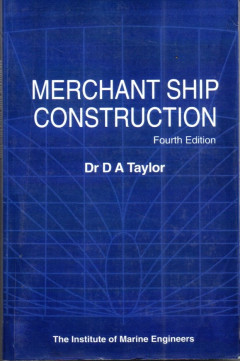
Merchant Ship Construction
The techniques of ship construction advanced steadily over the years. This book meets the needs of those connected with ships, whether practising engineers or students. It is an up-to-date review of current ship types, theire construction, special featuresnand outfit requirements. Current ship building techniques are described and the ship as a stressed structure is examined. The major items …
- Edisi
- Ed. 4
- ISBN/ISSN
- 1-902536-00-2
- Deskripsi Fisik
- ii, 274 hal; ill..; 15,5 x 23,5 cm
- Judul Seri
- -
- No. Panggil
- 623.82 TAY m

Code for Existing Ships Carrying : Liquefied Gases in Bulk
The purpose of this Code is to provide international standards for the safe carriage of liquefied gases in bulk by ships which are currently in service, or which otherwise fall outside the scope of the more extensive standards contained in resolution A.328(IX). Generally applies to ships delivered before 31 December 1976. The supplements, Summary of Minimum Requirements of the Code and the 1980…
- Edisi
- -
- ISBN/ISSN
- 978-92-801-1051-7
- Deskripsi Fisik
- 77 hal.; 15 x 24 cm
- Judul Seri
- -
- No. Panggil
- 623.827 IMO c

Goal-Based Ship Contruction Standards : For Bulk Carriers and Oil Tankers and…
The notion of "goal-based ship contruction standards" was introduced in IMO at the eighty-ninth session of the council in November 2002 through a proposal by the Bahamas and Greece (C 89/12/1), suggesting that IMO should play a large role in determining the standards to which new ships are built, traditionally the responsibility of classification societies and shipyards.
- Edisi
- -
- ISBN/ISSN
- 978-92-801-1563-5
- Deskripsi Fisik
- vi, 59 hlm ; 21 x 29,5 cm
- Judul Seri
- -
- No. Panggil
- 623.81 IMO g

Guidelines for the Provisional Assessment of Liquids Transported in Bulk
These Guidelines were approved in conjunction with the extension of the unified interpretation of regulation 3(4) of Annex II of MARPOL 73/78, which made it possible for Administrations to authorize manufacturers to carry out provisional assessments on IMO's behalf. The Guidelines also provide step-by-step procedures for ascertaining the carriage requirements of all liquids offered for bulk car…
- Edisi
- -
- ISBN/ISSN
- 978-92-801-1439-3
- Deskripsi Fisik
- vi, 44 hlm.; 15 x 21 cm
- Judul Seri
- -
- No. Panggil
- 343.093 IMO g

IMO Guidelines on Ship Recycling Consolidated Edition 2006
The IMO Guidelines on ship recycling recognise that, in order to contribute towards improvements in ship recycling, it is necessary to consider the ship throughout its life cycle, and also that the use of hazardous materials should be minimized in the design, construction and maintenance of ships, without compromising their safety and operational efficiency, and that there is a need to prepare …
- Edisi
- -
- ISBN/ISSN
- 978-92-801-1471-3
- Deskripsi Fisik
- v, 58 hlm.; 14 x 21 cm
- Judul Seri
- -
- No. Panggil
- 344.04 IMO i

Guidelines for the Control and Management of Ships' Biofouling to Minimize th…
These Guidelines for the control and management of ships' biofouling to minimize the transfer of invasive aquatic species (hereafter 'the Guidelines') are intended to provide a globally consistent approach to the management of biofouling. As scientific and technological advances are made, the Guidelines will be refined to enable the risk to be more adequately addressed. Port States, flag State…
- Edisi
- -
- ISBN/ISSN
- 978-92-801-1545-1
- Deskripsi Fisik
- iii, 34 hlm. ; 15 x 21 cm
- Judul Seri
- -
- No. Panggil
- 623.84 IMO g
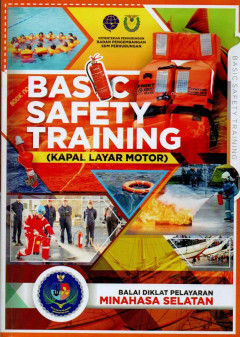
Basic Safety Training (Kapal Layar Motor)
- Edisi
- -
- ISBN/ISSN
- -
- Deskripsi Fisik
- 163 hal,; ill.; 21 x 29,5 cm
- Judul Seri
- -
- No. Panggil
- 363.37 DKP b
- Edisi
- -
- ISBN/ISSN
- -
- Deskripsi Fisik
- 163 hal,; ill.; 21 x 29,5 cm
- Judul Seri
- -
- No. Panggil
- 363.37 DKP b
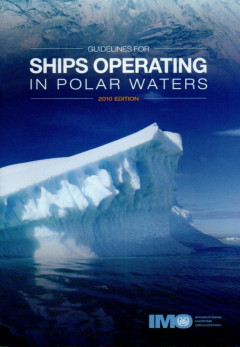
Guidelines for Ships Operating in Polar Waters, 2010 Edition
Ships operating in the Arctic and Antarctic environments are exposed to a number of unique risks. Poor weather conditions and the relative lack of good charts, communication systems and other navigational aids pose challenges for mariners. The remoteness of the areas makes rescue or clean-up operations difficult and costly. Cold temperatures may reduce the effectiveness of numerous components o…
- Edisi
- Edition 2010
- ISBN/ISSN
- 978-92-801-1522-2
- Deskripsi Fisik
- v, 40 hal.; 15 x 21 cm
- Judul Seri
- -
- No. Panggil
- 341.756 6 IMO g

Dedicated Clean Ballast Tanks
This publication brings together the following texts (resolution A.495 (XII)): - Revised specifications for oil tankers with dedicated clean ballast tanks, including dedicated clean ballast tank operation procedures and agreed interpretations of certain provisions of the revised specifications - Standard format for the Dedicated Clean Ballast Tank Operation Manual, including general guidelines …
- Edisi
- -
- ISBN/ISSN
- 978-92-801-1139-2
- Deskripsi Fisik
- 38 hal.; 21 x 29,5 cm
- Judul Seri
- -
- No. Panggil
- 623.882 45 IMO d

Ship Simulator and Bridge Teamwork, 2002 Edition. Model Course 1.22
This Model Course is practical and theoretical and consists of a series of exercises performed on a ship handling simulator. Classroom lectures, to provide the necessary theoretical background for the exercises, are included. Particular items dealt with in these lectures are illustrated either by including them as part of an exercise or by a separate simulator demonstration. Bridge teamwork is …
- Edisi
- Revised edition 2002
- ISBN/ISSN
- 978-92-801-4162-7
- Deskripsi Fisik
- v, 16 hal.; 21 x 30 cm
- Judul Seri
- -
- No. Panggil
- 623.82 IMO s
 Karya Umum
  Filsafat
  Agama
Agama  Ilmu-ilmu Sosial
  Bahasa
  Ilmu-ilmu Murni
  Ilmu-ilmu Terapan
  Kesenian, Hiburan, dan Olahraga
  Kesusastraan
  Geografi dan Sejarah