Ditapis dengan

OSV Chemical Code 2018 Edition : Code for the Transport and Handling of Hazar…
The present code has been developed for the design, construction and operation of offshore support vessels (OSVs) which transport hazardous and noxious liquid substances in bulk for the servicing and resupplying of offshore platforms, mobile offshore drilling units and other offshore installations, including those employed in the search and recovery of hydrocarbons from the seabed. The basic p…
- Edisi
- Edition 2018
- ISBN/ISSN
- 978-92-801-1697-7
- Deskripsi Fisik
- vii, 83 hal ; 21 x 29,5 cm
- Judul Seri
- -
- No. Panggil
- 623.888 IMO o

Guidelines on Low Coast, Low Technology Assessment of Dredged Material, 2015 …
This document provides guidance on the application of the waste assessment guidelines (WAG) using low technology and low cost methods. For example, it contains details on low cost sampling, testing, information gathering and documenting, consistent with the WAG, to allow characterization of the dredged material and selection of suitable disposal sites, including guidance on simple and low cost …
- Edisi
- Edition 2015
- ISBN/ISSN
- 978-92-801-1606-9
- Deskripsi Fisik
- ix, 78 hal ; ill..; 21 x 29,5 cm
- Judul Seri
- -
- No. Panggil
- 117.098 4 IMO g

Low Cost, Low Technology Compliance Monitoring : Assessment of Permit Complia…
The objective of this publication is to provide practical information about using low cost and low technology approaches that are useful for monitoring compliance with permit conditions associated with ocean disposal of waste materials or other matter. The primary audiences for this guidance are countries that are in the early stages of developing waste assessment and monitoring actions in conc…
- Edisi
- Edition 2017
- ISBN/ISSN
- 978-92-801-1663-2
- Deskripsi Fisik
- vii, 48 hal : ill ..; 21 x 29,5 cm
- Judul Seri
- -
- No. Panggil
- 344.046 343 IMO l

Low Cost, Low Technology Field Monitoring : Assessment of the Effects of Disp…
The objective of this publication is to provide practical information about using low cost and low technology tools that are useful for monitoring of possible environmental impacts associated with disposal at sea of either dredged material or inert, inorganic geological materials. The primary audiences for this guidance are countries that are in the early stages of developing waste assessment …
- Edisi
- Edition 2016
- ISBN/ISSN
- 978-92-801-1656-4
- Deskripsi Fisik
- xv, 110 hal ; ill..; 20,5 x 29,5 cm
- Judul Seri
- -
- No. Panggil
- 344.046 343 IMO l

Operational Guidelines on Sunken and Submerged Oil Assessment and Removal Tec…
The aim of the Guidelines is to provide practical guidance for assessing and responding to incidents involving sunken oil. Their scope is confined to sunken and submerged oil and does not include oil on sunken wrecks. The Guidelines also include references to other information sources.
- Edisi
- Edition 2016
- ISBN/ISSN
- 978-92-801-1589-5
- Deskripsi Fisik
- 84 hal : ill..; 21 x 29,5 cm
- Judul Seri
- -
- No. Panggil
- 341.762 53 IMO o

Guidelines on International Offers of Assistance in Response to a: MArine Oil…
Countries facing a major pollution emergency may require external resources to augment national response capacity for large, complex or significant oil spill incidents. In such cases, the Requesting Country may wish to issue a request for international assistance. This can be done bilaterally, multilaterally, or possibly through a regional mechanism, where these exist. Correspondingly, major oi…
- Edisi
- Edition 2016
- ISBN/ISSN
- 978-92-801-1651-9
- Deskripsi Fisik
- viii, 70 hal..; 21 x 29,5 cm
- Judul Seri
- -
- No. Panggil
- 104.479 4 IMO g

Goal-Based Ship Contruction Standards : For Bulk Carriers and Oil Tankers and…
The notion of "goal-based ship contruction standards" was introduced in IMO at the eighty-ninth session of the council in November 2002 through a proposal by the Bahamas and Greece (C 89/12/1), suggesting that IMO should play a large role in determining the standards to which new ships are built, traditionally the responsibility of classification societies and shipyards.
- Edisi
- -
- ISBN/ISSN
- 978-92-801-1563-5
- Deskripsi Fisik
- vi, 59 hlm ; 21 x 29,5 cm
- Judul Seri
- -
- No. Panggil
- 623.81 IMO g
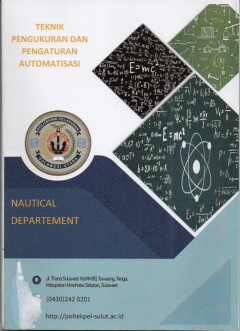
Teknik Pengukuran dan Pengaturan Automatisasi
- Edisi
- -
- ISBN/ISSN
- 978-602-5694-83-7
- Deskripsi Fisik
- vii, 77 hal, ill ..; 18 x 25 cm
- Judul Seri
- -
- No. Panggil
- 620.004 RAH t
- Edisi
- -
- ISBN/ISSN
- 978-602-5694-83-7
- Deskripsi Fisik
- vii, 77 hal, ill ..; 18 x 25 cm
- Judul Seri
- -
- No. Panggil
- 620.004 RAH t

Proposal Usulan Pengesahan (Approval) Penyelenggaraan : Ahli Teknika Tingkat…
- Edisi
- -
- ISBN/ISSN
- -
- Deskripsi Fisik
- ii,.. 21 x 30 cm
- Judul Seri
- -
- No. Panggil
- 620.009 2 p
- Edisi
- -
- ISBN/ISSN
- -
- Deskripsi Fisik
- ii,.. 21 x 30 cm
- Judul Seri
- -
- No. Panggil
- 620.009 2 p

Civil Liability for Oil Pollution Damage : Protocol of 1992 to Amend the Inte…
When it became clear that the Protocols of 1984 to the 1969 CLC Convention and to the 1971 Fund Convention were unlikely to come into force in the foreseeable future, because an insufficient number of States had adopted them, new, slightly amended protocols were drafted with lower requirements for entry into force. These draft protocols were presented to the 1992 International Conference on the…
- Edisi
- -
- ISBN/ISSN
- 978-92-801-1331-0
- Deskripsi Fisik
- vi, 112 hal.; 15 x 24 cm
- Judul Seri
- -
- No. Panggil
- 363.738 2 IMO c
 Karya Umum
  Filsafat
  Agama
Agama  Ilmu-ilmu Sosial
  Bahasa
  Ilmu-ilmu Murni
  Ilmu-ilmu Terapan
  Kesenian, Hiburan, dan Olahraga
  Kesusastraan
  Geografi dan Sejarah